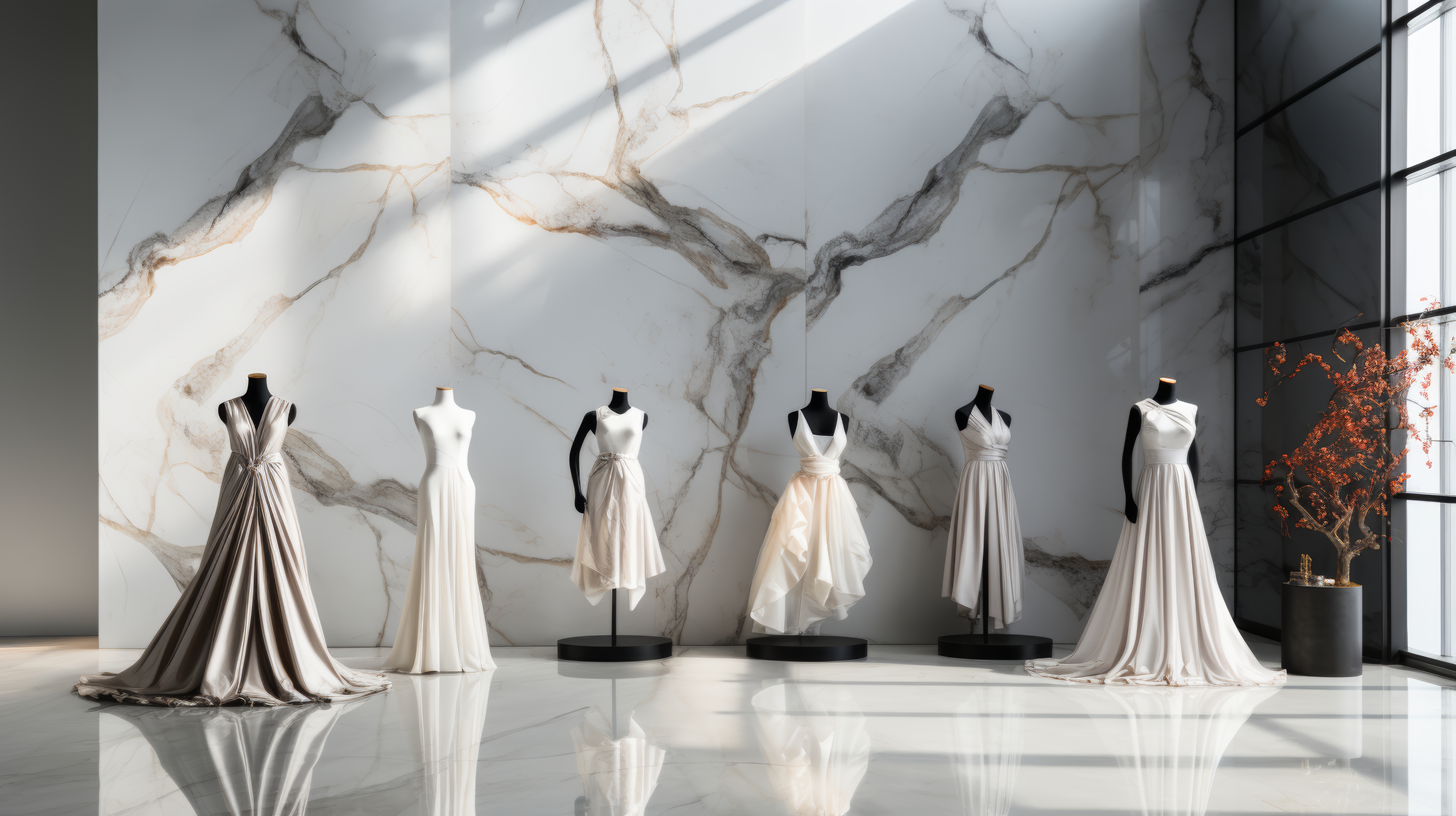
Haute Couture is a world distinguished by its legal protections, exquisite craftsmanship, and sophisticated marketing. This piece explores how this exclusive fashion, once the primary revenue source for fashion houses, has strategically evolved into a powerful brand-building tool.
Beyond the runway, haute couture serves as a powerful engine of brand profitability, its prestige-driven aura elevating mass-market and luxury goods. We will discuss in detail its intricate creative process, the indispensable contributions of specialized artisans (Métiers d’Art), and the deep cultural significance of couture as a form of wearable art and a reflection of societal ethos.
Legal Legacy and Historical Roots
“Haute couture”, a French term literally translating to high sewing, designates the specialized practice of producing exclusive, custom-fitted garments that embody both technical mastery and cultural significance.
It is not merely a stylistic descriptor; it is a legally protected designation in France. The Fédération de la Haute Couture et de la Mode (FHCM), acts as the ‘regulating commission’ that determines which fashion houses are eligible for this elite title. To earn the right to use the term, a fashion house must meet a demanding set of criteria that are meticulously enforced and reviewed annually by a commission domiciled at the Ministry for Industry.
This tradition was inaugurated by the English couturier Charles Frederick Worth (October 13, 1826 – March 10, 1895). At the youthful age of twenty, Charles Frederick Worth journeyed to Paris—the heart of elegance—where perseverance transformed ambition into destiny. His career began at Gagelin, a distinguished textile house, where he unveiled a modest dressmaking atelier. There, his artistry soon spoke for itself, winning distinction at the Great Exhibition in London (1851) and the Exposition Universelle in Paris (1855), triumphs that elevated both Gagelin and Worth into international renown.


Charles Frederick Worth and his atelier The House of Worth
In 1858, Worth unveiled his own maison, a daring venture that crowned him the world’s first celebrity designer and ushered in the golden age of haute couture. Paris, reborn under the Second Empire Napoleon III, shimmered with prosperity, artistry, and imperial splendor. At its center stood Empress Eugénie—Napoleon III’s wife, she was herself an avid devotee of style, chose Worth as her personal couturier. With her patronage, he ascended to the pinnacle of fashion, forever entwining his name with the grandeur of Parisian luxury.

Ball Gown

Dinner Dress

Evening Dress

Afternoon Dress

Wedding Dress

Evening Dress
House of Worth collection (1872-1896)
In 1868, with the encouragement of Empress Eugénie, the Chambre Syndicale de la Haute Couture was born. Its primary purpose was to safeguard the interests of fashion houses by codifying regulations and standards for the haute couture industry. In particular, it sought to protect designers’ intellectual property rights and to ensure that only ateliers meeting precise criteria could be designated as producers of haute couture. Charles Frederick Worth, alongside other Parisian couturiers, played a pivotal role as one of its founding members. The organization represented a decisive step toward institutionalizing couture as both a cultural and economic enterprise, while also preserving its artisanal integrity.


Empress Eugénie
The Chambre Syndicale de la Haute Couture officially became the Fédération de la Haute Couture et de la Mode (FHCM) on June 29, 2017, reflecting a modern, streamlined identity for the French fashion governing body.
Timeline of Name Changes
- The original body was founded in 1868 as the Chambre Syndicale de la Couture, des Confectionneurs et des Tailleurs pour Dame.
- Renamed to Chambre Syndicale de la Couture Parisienne in 1910.
- Became Chambre Syndicale de la Haute Couture in 1945, when ‘Haute Couture’ was designated a legally protected origin.
- In 1973, the Fédération Française de la Couture, du Prêt-à-Porter des Couturiers et des Créateurs de Mode was created, grouping the haute couture, ready-to-wear, and menswear syndicates.
- On June 29, 2017, this federation became the Fédération de la Haute Couture et de la Mode.
The shift to Fédération de la Haute Couture et de la Mode was intended to simplify the name and emphasize its central role in representing both Haute Couture and broader fashion sectors, reinforcing Paris’s status as the global fashion capital.
Beyond its regulatory function, the FHCM coordinates Paris Fashion Week and Haute Couture Week. It supports its members with strategic, communication, and economic assistance. The official calendar for Haute Couture Week includes three distinct groups of fashion houses that reflect the international scope and continued exclusivity of the industry
- Official Members: These houses have their atelier in Paris and meet all stringent criteria annually. They represent the heart of the industry and include iconic names such as Chanel, Christian Dior, and Schiaparelli.
- Correspondent Members: These are major international houses that present in Paris but may not have their primary ateliers in the city. This category includes brands like Valentino, Giorgio Armani Privé, and Elie Saab.
- Guest Members: This category is for emerging designers or brands invited to showcase their work. After receiving four consecutive invitations, a house may become eligible for membership. This serves as an incubator for new talent and ensures the industry remains dynamic and forward-looking.
| Membership Type | Criteria | Example Houses |
| Official Members | Paris-based atelier, minimum staff, bi-annual collection of 50 designs | Chanel, Christian Dior, Schiaparelli, Jean Paul Gaultier, Maison Margiela |
| Correspondent Members | International houses presenting in Paris | Valentino, Giorgio Armani Privé, Elie Saab, Fendi, Viktor&Rolf |
| Guest Members | Emerging designers or houses on a provisional basis | Balenciaga, Rahul Mishra, Robert Wun, Juana Martín |
At-a-glance visualization of the exclusive club of haute couture houses
Couture in the Making, From Concept to Creation
The creation of a haute couture collection is a complex, multi-stage process that fuses artistic vision with technical precision. The process begins with the designer finding inspiration from diverse sources, including art, architecture, nature, and current trends. This is translated into a conceptual vision, often documented on mood boards.
The initial ideas are sketched on the paper, yet the true magic unfolds in the atelier with moulage. Unlike ordinary design methods, this technique involves draping fabric directly onto a mannequin, sculpting it by hand to coax out the perfect lines and proportions. It is a tactile, almost sculptural ritual that transforms vision into form, laying the groundwork for the garment’s bespoke character. From this living canvas, patterns are traced and later transferred onto the chosen fabric. And here, the choice of textile becomes a decisive act of artistry—silk that flows like liquid, cashmere that whispers warmth, organza that captures light, or gazar that holds its architectural shape. Each fabric not only dresses the design but also redefines its soul.
Haute couture relies on the mastery of specialized artisanal workshops, known as the Métiers d’Art. It literally means “art trades” and highlights the artistic dimension of these skills. These ateliers focus on a specific, meticulously detailed craft, such as embroidery, feather work, pleating, shoemaking, or millinery. Many of these ateliers are centuries old and serve as guardians of traditional craft.
Chanel’s acquisition of many of these ateliers—such as Lesage for embroidery and Massaro for shoemaking—and their consolidation under the subsidiary Paraffection is a notable industry trend. This strategic move ensures the preservation of this heritage and secures the supply chain for intricate craftsmanship.
The essence of haute couture is the sheer amount of human labor and exquisite handwork poured into each garment. Each piece is handmade by skilled artisans , requiring a high level of expertise in construction, draping, and embroidery. The time-intensive nature of this work is a core element of its luxury value, a deliberate choice that champions the opposite of industrial speed and efficiency. The thousands of hours of handwork are a testament to an exclusivity that is impossible to replicate on a mass scale. This signals a product where price is irrelevant and the value is in the artistry and human touch, a direct rebuttal to the modern, rapid consumption cycle.
| Haute Couture Item | Hours of Labor | Additional Details |
| Giambattista Valli couture gown | 240 hours | Required 6,000 meters of fabric |
| Chanel Spring/Summer 2018 feathered dress | 750 hours | Crafted by skilled artisans |
| Dior’s “Miss Dior” dress (2021) | 800 hours | Made with extreme attention to detail |
| Hand-embroidered walls for Dior’s Spring/Summer 2023 show | 3 months | Measured 350 meters in length |
This table captures the scale of craftsmanship through tangible metrics.
The Economics of Rarity, The Luxury Equation
Haute couture’s identity is best understood in direct contrast to its commercial counterpart, ready-to-wear (prêt-à-porter). The two business models exist on opposite ends of the fashion spectrum, differentiated by their approach to production, pricing, and target audience.
The production process is a key distinction. Haute couture garments are entirely made-to-order and constructed by hand from start to finish for a specific client. This process is a labor of love, a singular, bespoke piece tailored for an individual. In contrast, ready-to-wear is mass-produced in factories in standardized sizes. Production is broken down into numerous separate, repetitive operations, such as cutting and sewing, to achieve maximum efficiency and cost-effectiveness.
The difference in production directly impacts pricing. Haute couture has no price limit; its value is not anchored to the simple sum of production costs but rather to its symbolic value. Prices are exorbitant and typically unpublished. For instance, a single gown can cost hundreds of thousands of dollars, a figure justified by the thousands of hours of handwork and the unparalleled craftsmanship. Ready-to-wear, while still having a wide price range for designer brands, is accessible to the general public due to its mass-produced nature and lower cost of production.
Fundamentally, the purpose and target audience for each category are fundamentally different. Couture garments are considered ‘true art’ and ‘pièces de résistance‘ not suitable for everyday use. The target audience is an extremely small, elite group of wealthy individuals, estimated to be only about 4,000 clients worldwide. Ready-to-wear, as its name implies, is designed for everyday wear and caters to a much broader audience, from the middle class to the aspirational luxury consumer.
The central paradox of modern haute couture is that it is often not directly profitable, yet it is a non-negotiable part of a luxury brand’s portfolio. The immense time and labor involved mean that the direct sales of haute couture often do not cover its production costs, making it a financial loss for many houses.
The true value of a haute couture division lies in its role as a strategic marketing tool. A single couture show creates a “halo effect” and an “aura of fashion” that elevates the entire brand. This prestige, or “symbolic value,” is what allows brands to charge premium prices for their more accessible ready-to-wear, perfumes, and accessories. The value of haute couture is not financial, but symbolic. A single, hand-embroidered gown that takes 800 hours to make is a profound statement of artistry and luxury. When this garment is seen on a celebrity at an event like the Oscars, it generates massive global publicity. This spectacle fuels the aspiration of millions of consumers who then purchase a more “accessible” luxury item—a handbag, a perfume, or a lipstick—to feel a connection to that brand’s unattainable glamour. The financial return is indirect and far outweighs the cost of the couture division. This demonstrates a pivot from a direct sales model to a sophisticated, value-based brand extension model, where the brand’s image is the primary asset.
Haute couture also serves as a laboratory for new designs, materials, and techniques. Simpler versions of couture creations can be filtered down and incorporated into ready-to-wear collections, a process that ensures creative innovation remains at the core of the brand while also serving as a tangible link between the brand’s creative pinnacle and its commercial offerings.
There are two official Haute Couture Fashion Weeks each year—January for the Spring/Summer collections and July for the Fall/Winter collections. Unlike other fashion weeks, Haute Couture Fashion Week takes place exclusively in Paris, the birthplace and sole custodian of this tradition. It is organized by the Fédération de la Haute Couture et de la Mode (FHCM), and only fashion houses granted the rare “haute couture” designation are eligible to present their collections.
While New York, London, and Milan host world-renowned fashion weeks, their focus lies in ready-to-wear, menswear, and other categories rather than haute couture. International showcases may use the word ‘couture’, but the authentic haute couture title—and the fashion week that embodies it—remains a distinction unique to Paris.
The Cultural and Societal Resonance
Haute couture transcends mere clothing to become a form of artistic expression, a ‘pièce de résistance‘ that exists as a cultural object. The elaborate designs, intricate embellishments, and masterful construction place couture in the realm of fine art, serving as a medium for designers to express ideas and creativity without the commercial constraints of ready-to-wear. The shows themselves are often artistic spectacles, with elaborate sets and thematic presentations that extend the art beyond the garment itself.
From Charles Frederick Worth’s vision of fashion as an art form to modern designers like Iris van Herpen who merge technology and craftsmanship into avant-garde, sculptural pieces , couture remains a vital space for artistic experimentation. It serves as a benchmark for excellence in the fashion industry, captivating the imagination of connoisseurs and enthusiasts alike.
Haute couture has consistently served as a powerful mirror to the aesthetic and societal values of its era. Christian Dior’s ‘New Look‘ in 1947 was more than a style; it was a reflection of the post-war desire for luxury, femininity, and a celebration of life after years of austerity. Conversely, designers like Coco Chanel introduced more practical and liberating clothing for women, reflecting the societal shifts of the 1920s.
The industry’s use of diverse cultural traditions also raises complex questions of cultural appropriation and the designer’s responsibility to acknowledge their sources of inspiration, reflecting a broader societal dialogue on identity and power. Historically, couture was a marker of wealth and class, a way to distinguish the elite from the masses. Today, while still a symbol of immense wealth, its meaning has expanded to include an appreciation for artistry and cultural heritage.
Despite its limited clientele, the fantastical and often unwearable pieces seen on the couture runways still shape global fashion trends and influence what is worn on the red carpet. In an era dominated by fast fashion—a system built on mass consumption, disposability, and the rapid replication of trends —haute couture stands as a profound counter-narrative. It champions the values of timelessness, craftsmanship, and exclusivity over fleeting trends. The industry’s focus on bespoke, handmade creations that are meant to last a lifetime is a direct philosophical and operational rebellion against the “fast” model. This enduring contrast suggests that haute couture’s continued existence is not just about a luxury business; it is a cultural statement about the enduring value of art, skill, and individuality in a world increasingly defined by mass-produced uniformity.
Final Reflections
Haute couture, a term legally protected and defined by the strictest criteria, occupies a unique position. It is irreplaceable within the global fashion ecosystem. Its business model has fundamentally shifted from a direct sales engine to a powerful brand-building asset, where the immense cost of its creation is justified by the prestige and halo effect it confers upon a brand’s other profitable product lines. This strategic pivot demonstrates a sophisticated understanding of modern consumer psychology, where aspiration and brand narrative are as valuable as the products themselves.
Beyond its commercial function, haute couture’s role as a cultural institution and a repository of traditional skills is more vital than ever. It serves as a living museum of human craftsmanship, a creative laboratory for designers to push boundaries, and a powerful cultural mirror that reflects and influences societal values.
The industry’s embrace of its Métiers d’Art and its deliberate focus on time-intensive, hand-crafted work is a profound counter-narrative to the prevailing model of fast fashion. In a world of increasing speed and mass production, haute couture remains a testament to the fact that true luxury is not about price alone, but about unparalleled craftsmanship, creativity, and the enduring power of a story told through art and meticulous design. The future of haute couture appears secure, not as a primary driver of revenue, but as the essential, non-negotiable pinnacle that sustains the very idea of luxury.